The Winch House: Photographing the Machinery Left Behind
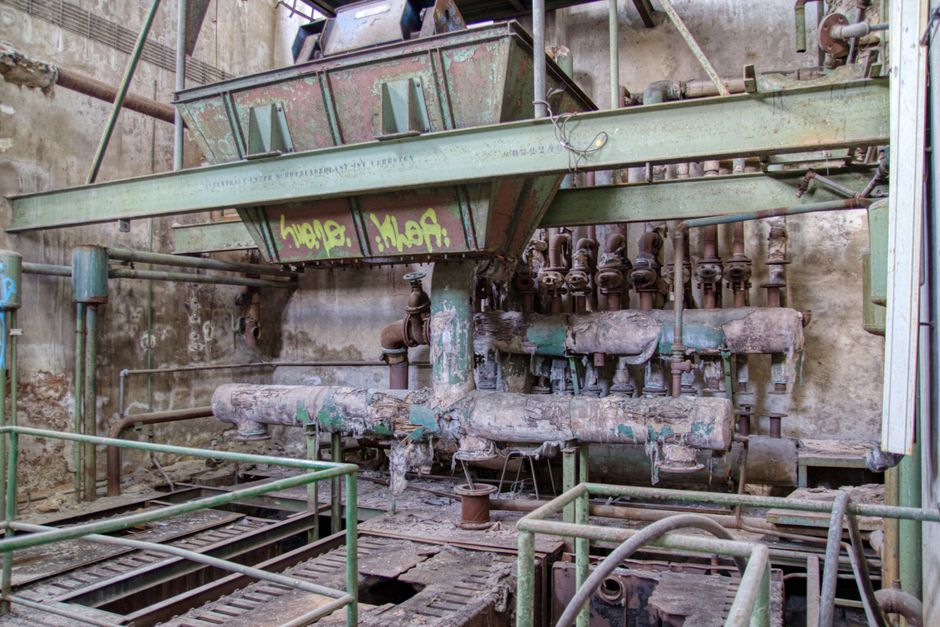
Walk into almost any quarry that closed before the 1970s and you will find the same cast of characters: a stone-built winch house, a steel drum wrapped in old cable, a brake lever worn smooth by hands, and maybe a small diesel engine that has not turned in half a century. These are the details that give a quarry its story. The rock face tells you what was taken; the machinery tells you how, and by whom. For a photographer, that is the difference between a landscape and a document.
I approach machinery slowly. The first instinct is to shoot the whole thing from the front, and that is almost never the best frame. Instead I circle it. I look for the brake handle, the maker's plate, the oil stains, the place where paint has survived under a lip of steel while everything around it has gone to orange rust. Rust is a colour, not a flaw, and soft overcast light is its best friend. Harsh sun will blow out the highlights on metal and crush the shadows into black, so I save machinery for cloudy days and keep the quarry vistas for clear ones.
Details That Carry the Story
Look for evidence of use rather than just decay. A worn threshold, a grease nipple with a cap still hanging on its chain, a chalk mark on a beam, a row of hooks where oilskins once hung. These small things anchor the image in human labour. I often shoot them with a standard lens rather than a macro, because I want some context — the handle in its housing, the plate on its riveted beam. When I do go close, I stop down to keep the whole object sharp; a half-focused maker's plate is a missed opportunity.
Texture is the other reward. Corrugated iron, flaking whitewash, timber grain raised by decades of rain, moss creeping along a cable. Side light from a low sun will pull these out, but it is rare to find that light indoors, so I sometimes use a small torch to add a little raking light from the side. A handheld LED panel works too, and it lets you shape the beam so the surroundings stay dark. Just keep the effect subtle. The moment a viewer can tell you lit it, the atmosphere of abandonment is gone.
Respect, Access and the Ethics of Ruins
Old machinery is fragile in ways that are not always obvious. A cast-iron wheel can look solid and be cracked through; a wooden platform can be a shell. I never climb on equipment, never move parts for a better composition, and never take souvenirs. The winch house belongs to whoever owns the land, and to everyone who might visit after me. If a gate is locked, that is the answer. If a sign says keep out, the photograph is not worth it — there are plenty of accessible sites with permission, and a polite email to a landowner often opens doors that a crowbar never would.
When I get home, I keep the editing restrained. A little contrast, a touch of clarity on the rust, and a crop to remove distractions. Heavy HDR makes machinery look like a video game and drains the sadness out of it, which is the very thing worth preserving. Process the frame so it looks like the place felt at the time: quiet, heavy, and a little bit forgotten.