A Short History of the Quarry Railway
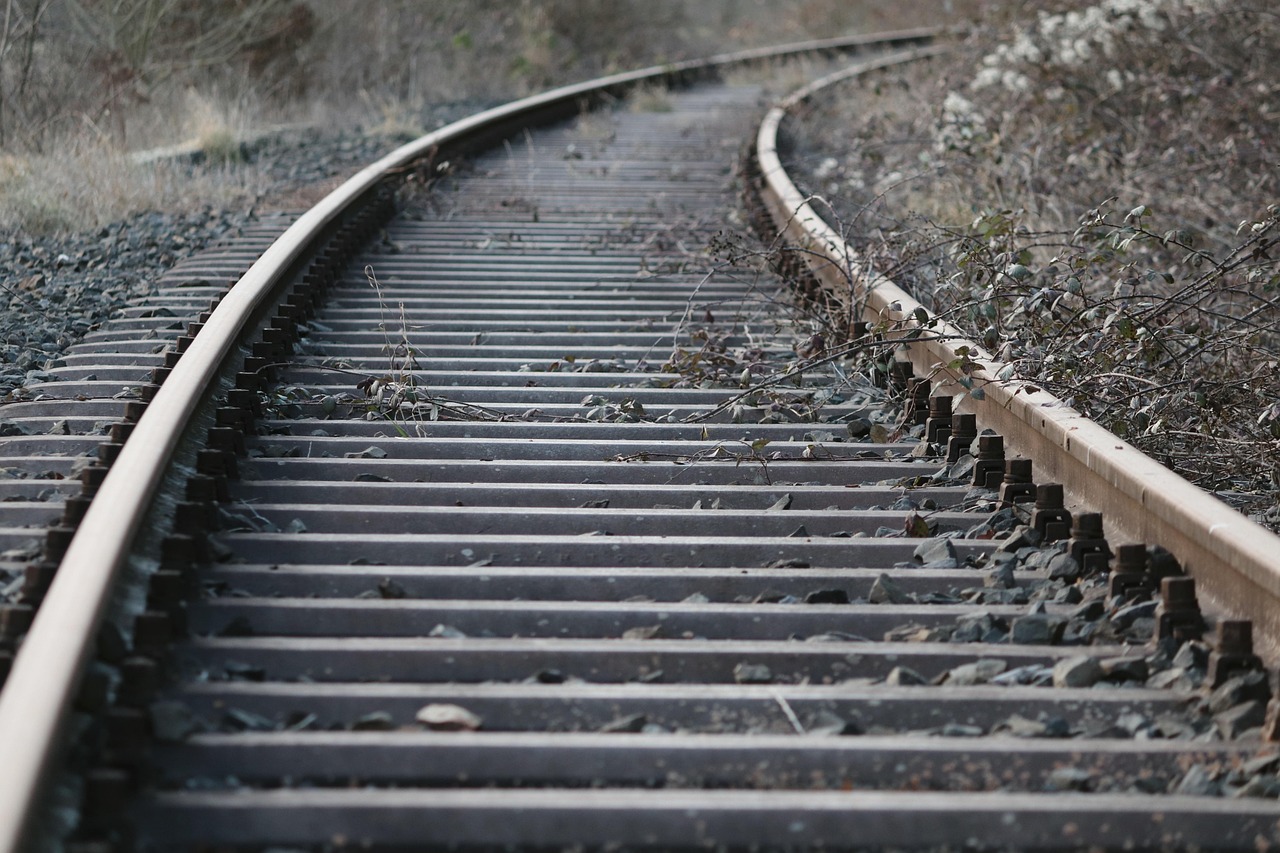
Before lorries took over, almost every serious quarry had its own railway. Sometimes it was a short narrow-gauge line running from the face to a crusher or a loading dock. Sometimes it was a branch connecting the quarry to a main line, with wagons of stone rolling down under gravity and empty ones hauled back up by cable. These railways were built cheaply and quickly, and when the quarries closed they were often left in place, which is why so much of their infrastructure survives for photographers today.
The most visible traces are the formations. A railway needs a level bed, and in hilly quarry country that meant cuttings, embankments and curving shelves cut into the hillside. Even where the rails are gone, you can often follow the line by eye: a green ribbon through the spoil, a flat terrace on a slope, a gap in a wall where a bridge once stood. Incline planes are especially distinctive. These were steep, straight ramps where wagons were lowered on a cable, and the cuttings they left look like giant slides carved into the rock.
What Survives and Where to Find It
Rails themselves are often the first thing to disappear, taken for scrap or reused elsewhere, but the heavier furniture lingers. Look for stone sleeper blocks with rusted bolt holes, turntables, buffer stops, and the stout stone piers of loading chutes. Weighbridge houses are common survivors too, small square buildings beside the track with a pit underneath for the scales. Signal posts, point levers and the occasional wagon turned into a shed are all worth a frame. I keep a mental checklist when I arrive at a new site: trackbed, incline, weighbridge, wagon, and any building with a door wide enough for a cart.
Light is everything with railway remains. The lines are linear, so they work best photographed along their length with a low sun raking across the sleepers and casting long shadows between them. A wide lens close to the ground exaggerates the curve of the track and pulls the viewer in. Where the rails have gone, the sleeper blocks become a rhythm of dark rectangles, and that rhythm is the photograph. I sometimes use a long exposure to soften moving grass along the trackbed and let the hard geometry of the line stand out against it.
Reading a Railway Without Rails
The best way to photograph a quarry railway is to understand what you are looking at before you raise the camera. A few minutes with an old map, if you can find one, will show you where the sidings were, which way the wagons ran, and where the incline met the main line. That knowledge changes what you notice. A flat patch of grass becomes a turntable. A stone wall with a gap becomes a bridge abutment. The photograph then carries meaning for anyone who looks at it, even if they do not know the history themselves.
These lines were never built to be beautiful. They were built to move heavy stone cheaply, and their geometry is entirely practical. That is exactly why they photograph so well. There is no decoration, no fuss, just curves and gradients and hard-won level ground. A hundred years later, the grass has taken the rest, and what is left is a set of lines drawn across the landscape by people who are no longer here. That is the picture I am always trying to make.