Granite, Slate, Limestone: How Rock Type Shapes Your Photographs
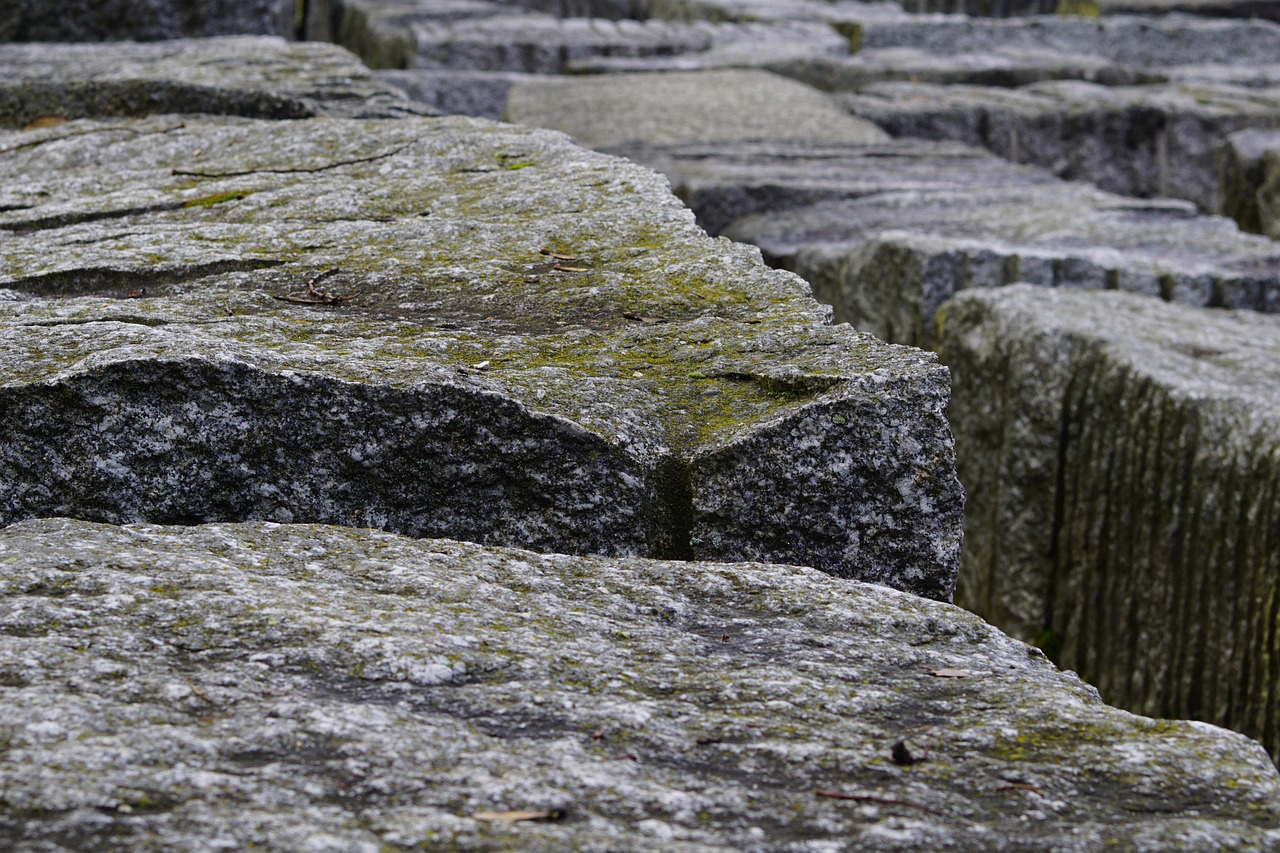
Not all quarries look alike, and the single biggest reason is the rock itself. Granite, slate and limestone produce three completely different kinds of space, and if you understand how each one behaves, you can choose your lens, your time of day and even your season before you leave the house. This is the part of quarry photography that rewards a little reading. Geology is not just background knowledge; it is a lighting and composition tool.
Granite quarries tend to be broad and blocky. The stone was extracted in huge rectangular blocks, so you get stepped benches, sheer walls and often a floor of crushed spoil. Granite is pale and slightly reflective, which means it bounces light around and can look flat and washed out at midday. Photograph it early or late, or in dramatic weather. The rewards are strong shadows in the joint lines and a sense of monumental scale. A figure standing on a bench gives that scale away, so I often wait for a person or a piece of machinery to enter the frame.
Slate: Vertical, Dark and Dramatic
Slate quarries are the opposite. The rock splits along planes, so the workings tend to be deep, narrow and vertical, with towering faces and dark caverns where the galleries were cut. Slate absorbs light rather than bouncing it, so the pits feel like wells. This is wonderful for mood but hard for exposure. I meter for the brightest part of the sky and let the rock go dark, or I bracket and blend later. Wet slate is a gift — it turns almost black and glossy, and any colour in the scene, a red jacket, a patch of autumn bracken, sings against it.
Because slate pits are enclosed, they hold mist and cold air, and they often have their own little echo. Sound matters here more than you would think; the quiet of a slate quarry is part of why people return to them. In photographs, I try to suggest that quiet by keeping the frame simple: one wall, one pool, one shaft of light. Too many elements and the stillness disappears.
Limestone: Pale, Open and Strange
Limestone quarries are usually brighter and more open, often worked from the top down in wide terraces. The rock is light grey to cream, sometimes with fossils and flint bands that show up beautifully in raking light. Flooded limestone pits have that famous milky blue-green water, caused by fine particles suspended in it, and it photographs almost like a tropical lagoon. That can be a trap: the colour is so striking that it overwhelms everything else. I look for contrast — a dark tree on the rim, a rusted chain, a lone bird — to stop the image becoming a colour swatch.
Limestone also weathers into strange shapes. Solution holes, fluted faces and small caves appear where water has worked at the rock for decades. These are perfect for close work with a standard lens, and they give a limestone quarry a character no granite pit can match. Whichever rock you are shooting, spend ten minutes just looking before you set up. The stone will tell you what it wants, if you let it.